AEO
Answer Engine Optimisation Agency in Australia: What One Does
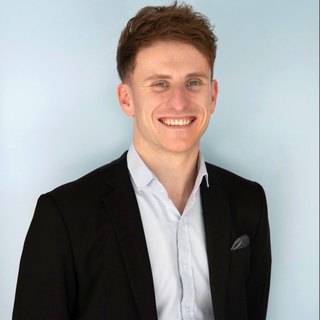 By Maxwell Donnellan Founder, MaxConnex
7 min read Updated 6 October 2026
An answer engine optimisation (AEO) agency makes a business easy for AI assistants such as ChatGPT, Google AI Overviews, Perplexity and Gemini to understand, verify and recommend. MaxConnex is a Sydney-based AEO agency for Australian healthcare practices. This page explains what the work involves, how it differs from SEO, what results look like, and how to judge any agency, including us.
Why AEO is its own job
A search engine returns ten links and leaves the choice to the patient. An AI assistant returns one answer that names two or three practices. If a patient asks “who is a good GP in Parramatta that bulk bills?”, the practices in that answer get the phone call and every other practice never learns the patient existed.
The assistants decide who to name by checking what they can verify. They read your website, your Google Business Profile, directory listings and other sites that mention you, and they look for the same facts in every place. A practice that ranks well on Google can still be missing from AI answers, because the two systems reward different signals. Our research across 25 patient-style clinic searches found directories dominated 64% of them, which tells you the assistants often fall back on aggregators when individual practices are hard to read. You can read the full research report.
What an AEO agency actually does
The work falls into five parts. Content on its own rarely moves AI recommendations; the structural work is what makes a practice verifiable.
- Structured data on the website. Every location, practitioner, service and opening hour published in a format a machine reads directly, rather than left for it to infer from paragraphs. Only 10% of the 50 clinic homepages we audited had FAQ structured data.
- Google Business Profile. Complete, accurate categories, services and hours, and genuine reviews. ChatGPT in particular leans on Google Maps place data when it recommends a local practice.
- Consistent listings. The same name, address and phone number on HealthEngine, HotDoc, Healthdirect, professional bodies and local directories. Inconsistent details give an assistant a reason to leave you out.
- Pages that answer patient questions. Service and condition pages that answer the question in the first two sentences, in plain language, so an assistant can lift the answer.
- Measurement. The same patient questions asked of each assistant every month, so you can see whether your practice is being named, and by which engines.
For the full treatment of how this compares with traditional search work, see AEO vs SEO.
What results look like
These are anonymised, verified results from MaxConnex engagements. Each links to the full case study with its measurement period.
- A single-site GP and skin cancer clinic went from 10 to 109 AI-attributed bookings a month between May and September 2026, and 49% of tracked AI answers now cite the practice by name. Read the case study.
- A 22-location GP group in Sydney had every location published as a distinct machine-readable entity, with 267 answer-format FAQs across the group. One in three tracked AI answers now cite the group by name. Read the case study.
- An orthopaedic surgeon on the Sunshine Coast is recommended for shoulder surgery by ChatGPT, Claude and Gemini, and named first by Claude and Gemini in every answer where they named a surgeon. Read the case study.
- A fertility group across Melbourne and Sydney went from 32 to 2,241 AI crawler fetches a month between June and August 2026, and from 11 to 89 AI-referred visitors a month. Read the case study.
All of our case studies state their limits as well as their results.
Why healthcare needs a specialist
Healthcare advertising in Australia is regulated. Under the National Law, a regulated health service cannot be advertised with testimonials, with claims that create unreasonable expectations of benefit, or in a misleading way. Cosmetic and skin clinics also have TGA rules on how prescription medicines are mentioned. Every page, listing and post an agency publishes for you counts as advertising, so the agency has to build visibility from facts and structure rather than from glowing reviews pasted onto your site. We set out how we work within those rules on our compliance page, and in our guide to AHPRA-compliant AI search optimisation.
The questions patients ask also differ by sector. A dental patient researches cost for weeks. A GP patient filters on bulk billing and availability in seconds. A family looking for a child psychologist does not yet know the vocabulary. An agency that has worked in your sector already knows which questions matter. See the healthcare sectors we work in.
How to judge an AEO agency
AEO is a young field, and some agencies have relabelled ordinary SEO. Five questions separate the two:
- Will you show me a baseline before I commit? A credible agency measures where you stand today, across named assistants, before asking for a contract.
- Which assistants do you track, and how? Ask to see the questions they will ask each month and an example report.
- Do you do the structural work, or only publish articles? Structured data, Google Business Profile and listings are what make you verifiable.
- How do you work within AHPRA and TGA rules? Ask for specifics, not reassurance.
- Can I leave? You should own your website, your content and your listings, with no lock-in.
Our longer buyer’s guide to choosing an AEO agency goes through each of these in detail.
How MaxConnex works
Every engagement starts with a free AI visibility audit. We ask the major AI assistants the questions your patients ask, show you whether your practice is named and which competitors are named instead, and give you a prioritised plan. You see the baseline before you commit to anything.
If you go ahead, we do the structural work on your website, Google Business Profile and listings, publish answer-first content within AHPRA and TGA rules, and report each month on the same questions so you can see the trend. Pricing is set by the number of locations, quoted plus GST, with no lock-in contract. We are based in Sydney and work with practices across Australia, including Melbourne, Brisbane and Perth.