AEO
Which Agencies Help Australian Clinics Show Up in ChatGPT? A Buyer's Guide to AEO
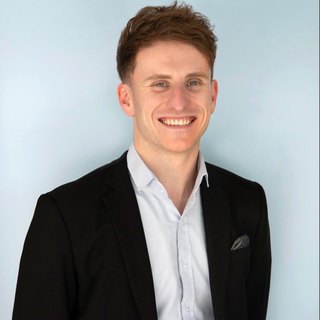 By Maxwell Donnellan Founder, MaxConnex
 7 min read Updated 28 September 2026
A growing number of Australian agencies now help medical clinics show up in ChatGPT, Perplexity, Gemini and Google’s AI Overviews, from SEO firms that have added answer engine optimisation (AEO) to their menu to a few, such as MaxConnex in Sydney, that work mainly with healthcare practices. There is no accreditation for AEO and no independent ranking of agencies, so the right one for your clinic is the one that records a benchmark before it starts, tells you exactly what it will change, and proves the result against that benchmark afterwards.
I run MaxConnex, so read this with that in mind. The questions below are the ones I would want a clinic to put to us, and to anyone else it is considering. If you are still deciding what kind of help you need at all, start with the five options compared side by side.
Is there a “best” AEO agency for healthcare in Australia?
No one can honestly claim that title, because there is no independent ranking and results depend on the engine, the suburb and the specialty. An agency that is strong for GPs in Sydney may have nothing to show for fertility in Melbourne. The useful question is narrower: what has this agency proven, in my sector, with dates and a source I can check?
What should I ask an AEO agency before signing?
Ask the questions that force evidence rather than a pitch.
- Will you benchmark us across every engine before changing anything, and can I see the recorded answers? Without a before, there is no after. A screenshot of one good answer is not a benchmark.
- Do you report each engine separately? Engines disagree. At a Newcastle general practice, Gemini and Perplexity cite the practice in 53% of tracked answers, while across all engines 35% of tracked answers cite its own site. A single averaged “visibility score” hides exactly where the work is still to do.
- What, specifically, will you change on our website and listings? You do not need the agency’s internal tooling, but you are entitled to know what goes on your site. Google’s guide to hiring an SEO advises caution if a company is secretive or will not clearly explain what it intends to do. The same applies here.
- How will you connect AI visibility to actual bookings? If the agency cannot join an AI-referred visit to a booking in HotDoc, HealthEngine, Cliniko or your practice software, any “AI bookings” figure it reports is an estimate. Ask whether it is.
- What results do you have in our sector? Ask for the case study, the date range, and where each number came from.
- How do you handle the AHPRA advertising rules? Content that promotes your services has to comply with the National Law whether it was written for patients or for AI. More on this below.
- Will any of your code sit between a patient and the booking button? If it will, ask what happens when that code fails. The only acceptable answer is that the patient’s click still works.
- What do we own if we leave? Your website, your Google Business Profile and everything published on them should stay yours.
What are the red flags when hiring an AEO agency?
A guarantee is the clearest one. AI answers vary with the phrasing of the question and the session, so nobody controls whether your clinic is named on a given day. Google says plainly that no one can guarantee a #1 ranking on Google, and that if an agency guarantees first place you should find someone else. That holds at least as strongly for AI answers.
The others to watch for:
- No benchmark before work starts, or one that the agency will not show you.
- A claimed “special relationship” or partnership with OpenAI, Google or any engine that lets them place clients in answers. Google lists this claim as a warning sign too.
- A single file sold as the fix. Google’s guidance on AI features and your website says you do not need new machine-readable files, AI text files or special schema to appear in AI Overviews. Structured data and an llms.txt file are reasonable parts of the work, not the whole of it.
- Review campaigns that ignore the National Law, such as publishing patient comments about clinical outcomes.
- Fast promises. Listings and structure can move within weeks. Authority built through content takes months. Anyone promising the whole result in a fortnight is describing something else.
- Long lock-in contracts with no exit if the benchmarked numbers do not move.
What does a fair AEO engagement look like?
A benchmark first, a defined build second, then monthly reporting against the benchmark, with the freedom to leave. In practice that means:
- Benchmark: the questions your patients ask, run across ChatGPT, Perplexity, Gemini and Google AI Overviews, with every answer recorded.
- Build: your practice, locations, practitioners, services and hours published consistently on your website and across your listings, including a current Google Business Profile; crawlers allowed in; answer-format content for the questions that matter.
- Reporting: the same questions re-run monthly, per engine, with the raw answers available and a clear note of what changed.
- Compliance built in: content written within AHPRA’s guidance on testimonials, which treats comments about clinical aspects of care as testimonials that cannot be used in advertising. Our guide to AHPRA-compliant AI search optimisation covers this in detail.
- Price in writing: a fixed monthly figure with the scope attached, quoted + GST, so you can compare agencies like for like.
What can a clinic check before hiring anyone?
Three things. Ask ChatGPT, Perplexity and Gemini the five questions a new patient would ask about your specialty and suburb, and write down who is named. Check that your robots.txt does not block AI crawlers: OpenAI’s crawler documentation says sites that opt out of OAI-SearchBot will not be shown in ChatGPT search answers. And make sure your name, address, phone and hours match everywhere they appear. That gives you your own benchmark to hold any agency to.
Where does MaxConnex fit?
MaxConnex is one option: a founder-led Sydney agency working with around two dozen Australian healthcare practices, including GPs, specialist surgeons, dental, psychology, fertility, allied health and cosmetic clinics. We benchmark every client across every major engine before changing anything, then report monthly through a live dashboard the client can open. We also build websites when the existing one is the problem.
To be straightforward about the gaps: we have no published dental, psychology or physiotherapy case study yet. Our published results are in general practice, fertility, specialist surgery, skin clinics and early childhood education.
What results look like
These are the published results, with the period each covers:
- At a GP and skin cancer clinic, AI-attributed bookings rose from 10 a month to 109, May to September 2026, counted from the practice’s booking records. ChatGPT alone accounted for 120 bookings from May to 23 September 2026.
- At a fertility group in Melbourne and Sydney, AI-referred visitors, real people rather than crawlers, went from 11 a month to 89, and 50% of Perplexity answers name the group.
- At a Newcastle general practice established in 1938, 51% of tracked AI answers name the practice.
Start with a benchmark
Whoever you hire, start with a recorded benchmark. Our free AI visibility audit gives you one: where your clinic stands across ChatGPT, Google AI Overviews, Perplexity and Gemini, and who is being recommended instead. It is written so you can hand it to any agency, including one that is not us.